Farihah Choudhury is a British-Bangladeshi public health nutritionist with a passion for sustainability. She also is the brains behind her blog farihahchoudhury.com, and Instagram account easypeasysustainability. She explores how sustainability can be embedded in our everyday lives and gives helpful resources for those wanting to learn more. We sat with her to discuss Secondhand September and sustainability in our daily lives.
Lucy: It's great to have you here.
Throughout the month of September, we are highlighting those people making an impact within the sustainability space. Whether through lifestyle, beauty, or even fashion, now I know that you cover many different areas, so tell us a little about your work and what you do.
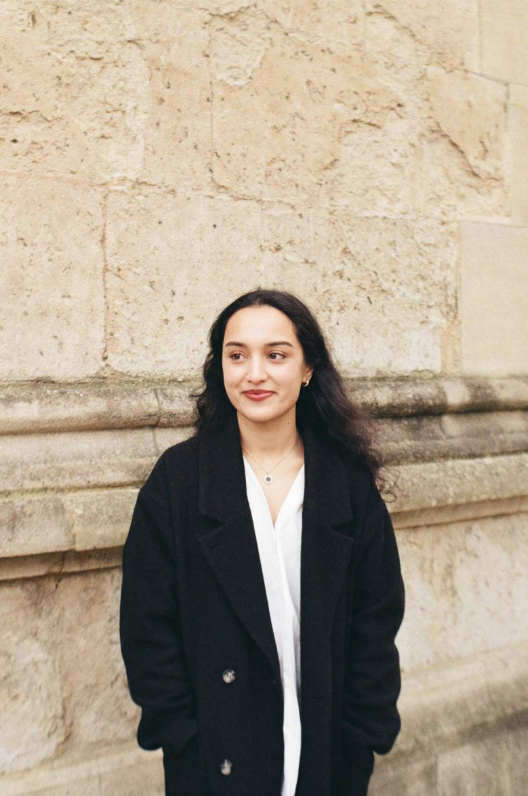
Farihah: Yeah, sure, so I do a few different things, but essentially, in my day job, I work as a public health nutritionist, so I work in an office, and I work on many things, including public policy. I also do lots of work on sustainability, so there is quite a crossover with my blogging.
While I was a student, I started easypeasysustainability in 2018, which is my Instagram blog. Since then, I began to grow, and I'm now started doing sustainability consultancy, so I work with brands, organisations, and other creators to create impact in the sustainability space.
I particularly like working around sustainable food and fashion. Kind of all things circularity and sharing economy and also doing bits around sustainable travel.
I am also a writer as well as doing some speaking.
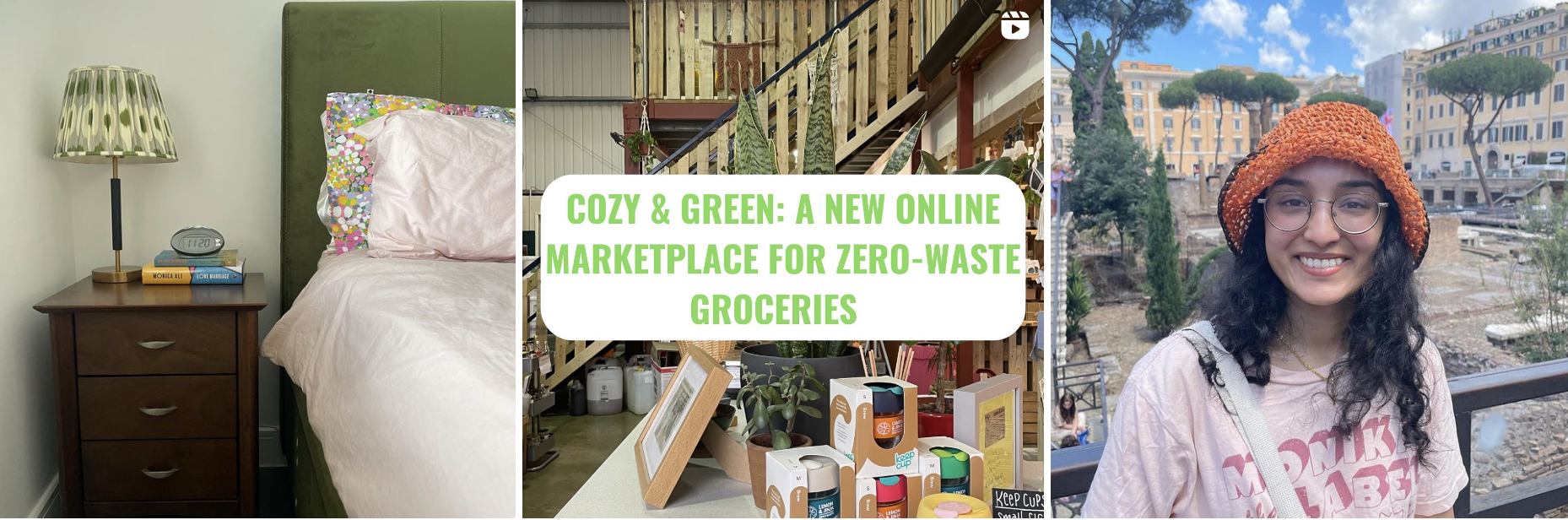
Lucy: A lot is going on. I like it.
The main point here is that you are educating, you are sharing, and you are informing. I think there's a lot of crossover between the world of fashion and food when it comes to sustainability because, over the last decade, there has been this sort of shift in us wanting to know what we are eating, what the ingredients are, are they wholesome, are they organic, all of these things. Really looking at those labels, that's exactly what we're doing when it comes to the world of fashion; we're dissecting and going in deeper within what it is we’re actually wearing.
Now your bio says (and I love this) ‘dreaming of a circular, sharing economy.’ Why is sustainability so important to you?
Farihah: My interest in sustainability really started from my heritage. As I mentioned in my bio, I’m Bangladeshi. I wasn't born in Bangladesh, but both my parents were. When they moved over to this country, they looked for things that we would do now to be sustainable in this country. Still, they were already doing it when I was little, such as making things go further, buying in bulk, reusing stuff all the time, and handing down clothes, just as a way of survival from when they lived in Bangladesh, as they didn't really grow up with very much.
I have kind of learned those values throughout my childhood, which led them into adulthood as well. At university, I did a Biology Degree; as part of that, we did a global climate change module, and I learned all the theories around climate change and environmental destruction. I think two things: my background and this academic knowledge, and knowing about the impacts of climate change really affected me. So, I brought those two things together and started my blog.
It really comes from a place of climate justice to me, and knowing that countries like Bangladesh are going to be underwater by 2050, there’s an element of climate justice.
Looking at my heritage and looking at those practices and how they are sustainable by nature, also using my platform to talk about those practices and how those are kind of sustainable by nature and also kind of using my platform to talk about those things through the runs of like you know what can we do here in the UK what are the options available plus in the UK and how do we stop like climates are asked to kind of wrap around the world a bit gloomy, but that's kind of where that comes from me.
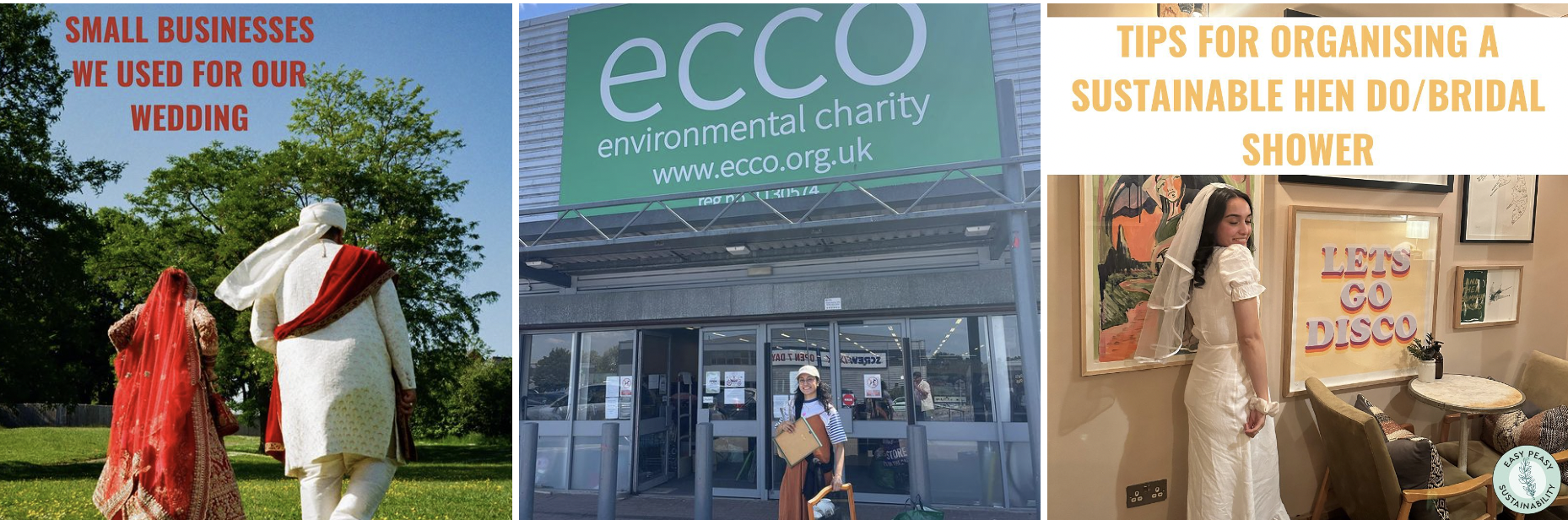
Lucy: It is gloomy. It's also the hard truth of what's happening, and I think what is great about what you're doing in the content that you're creating is that...
Your handle actually says it for itself easy-peasy-sustainability, and you look at your blog and the categories in the way that you've broken down things, it makes it very sort of easy to digest and actually start to make those simple changes that can have a bit bigger impact than you actually think.
How has your platform changed or possibly influenced your opinions on sustainability, especially as you know, with second-hand fashion and what we do? You know, I think a lot of our listeners would be interested to hear your sort of shift in the world of second-hand fashion and sustainability when it comes to clothes.
Farihah: Yeah, sure, so one big thing about Instagram as a platform, like there are so many other platforms now, and like, obviously, people who have always been on YouTube before Instagram, but I'm very much like just Instagram. One thing I've loved about Instagram is the community that I've kind of grown through it, so, like, the sustainable fashion community, like they're just the general sustainability community.
I have learned a lot from the community, and you know the work that they put into their platforms and the content that people create. I've learned loads of things through doing that as well since I first started my platform.
It's very different from what it is now, and obviously, that's changed as I've grown older, and my interests have changed. I think I've learned a huge amount of stuff. When I first started my platform, I was a student, so I was pretty much talking about plastic-free swaps that students can do, which is great, but it was instead kind of surface-level stuff, and there was quite a big focus on plastic-free living.
But I've kind of since realized that it's more about like the systems that we live in rather than like really like individual changes that people can make but also like the power of like collective actions so like a fashion the power of like if everyone shops second-handed if everyone shopped less you know those are kind of messages that really came through the community on Instagram so yeah, that's definitely one way that I've evolved and yeah built a community.
The platform has been going for like a really long time now, so it's crazy. How much has changed since the beginning, but I've just learned so much sometimes. I'd like too much information. I've learned too many things, and my brain can't take it.
Lucy: There's just so much out there. And it's great cause there is a lot for us as consumers to be able to read and know about. But I also think that we have a responsibility to question and to ask whatever it is that we want and never feel stupid or as though our question, thought, or opinion isn't valid because it really is. Everyone has time for it, especially when it comes to sustainability.
You made a great point about the community.
Yes, those small changes do make some kind of difference, but the bigger focus as a community and the collective change we can make.
Some quick questions for the month of secondhand September. I get a little frustrated, to be honest. Everyone is always saying, 'Yes, secondhand September,' but then we forget about it after that. If you are not part of the collective change of preloved fashion. So I'd love for you to give us some quick tips and tricks on shopping, secondhand or anything you found just to help prolong this shift of yes, not just buying preloved for September but how can I actually make this part of my routine when it comes to buying as a consumer.
Farihah: I think my biggest tip is always going to be to buy less because I think one thing that people who want to get into sustainable fashion who want to buy second-hand more the trap that they fall into is that they try and replace the volume of like fast-fashion or high street fashion. They're buying with like second-hand fashion. And then they find that they still have an issue with buying clothes that they don't worry about, or they don't really fit or end up at the back of the wardrobe or don't get off the hanger. And I think the mindset shift is almost like it's almost like less about swapping from buying new to second hand and more about whether we can think about consumption habits in general and like buying less and kind of more consciously.
So that's that's always the first tip, and then another tip would be with second-hand clothing when you first get into it. It's really, really exciting, and you kind of find those of different races shop, and you find all your favorite charity shops, and you go on Depop and vinted. Having a sort of process for buying stuff, whether you're buying it new or new to you. It's really important to have a sort of thought process about do I need it. Do you know how much do I want to and the same process? You'd have, if you like, walked into, I don't know, a Zara or something. You know, you look at it on the hanger, and you need to think, where am I going to wear it? You know, will I still wear this in five years' time? You should have the same process around second-hand shopping.
A third tip with second-hand shopping would probably be to make use of all the different unique ways that you can shop pre-loved. It's not all about shopping; you can also go to clothes swaps. You can share with your friends, and you can rent stuff. There are so many ways to access pre-loved clothing. That's one thing that was really cool to me because when I first got into second-hand shopping, I thought, cool, it's all about charity shops.
But there are apps, and not only are there like resell apps peer-to-peer, but there are also platforms like Thrift Plus. You know, Fox Farm online and things like that, so just kind of understanding the kind of breath of pre-loved clothing and the ways you can access it and also things you can do yourself is really quite amazing, so yeah, getting to grips through the different platforms. Those are my top three. There are so many other tips.
Lucy: We have to head to your blog to find out more.
I'm so glad that you mentioned that when you get into secondhand, there is this urge to be like, 'Oh, I'm saving so much money I can buy more; I can afford a little bit more.' But actually, it's still part of the problem because you are consuming more that you are not wearing that's ending up at the back of the wardrobe, and then what are you going to do with it?
That's one of our main focuses now on secondhand styling is that, yes, people can shop, but it is to utilise this membership program that we have where you can swap, you can save, you can reuse, you can reset your wardrobe.
You can think, and you can really start to consume with an intentional mind when it comes to fashion rather than just continuing to be part of this problem that we have.
I really want to thank you for your time. It was so lovely speaking to you.
How can people find out more about what you're up to? How can they check out your blog? And how can they stay up to date with all of those new and exciting things you are sharing? I know that you do really good listicles of what things are happening and where things are happening, and I'd love for my readers to find out more.
Farihah: There are two main ways where you can find the content. I post on Instagram stories pretty much every day, so that's the best way to keep up to date with stuff. I try to post only valuable things on there, so hopefully, it's not spam. But my Instagram is @easypeasysustainability. I have a website as well, which is my full name, FarihahChoudhury.com, and I've got some permanent blogs on there. So, I have a sustainable travel blog. I have an extensive long list of sustainable retailers and pre-loved platforms, which I try to update regularly. There are lots of other things about ways you can swap and ways you can rent clothes on there as well, and I've got referral codes and affiliate codes with brands that I worked with on there to see if people find that helpful. Those are the two main ways: my website and my Instagram.
Lucy: We thought you'd be an excellent fit for this (an interview for Secondhand September) because you have great resources and tips. And that's a great starting point for anyone venturing into the world of sustainability and anyone choosing more eco-conscious ways of living.
Thank you so much, Farihah!
Find out more at Farihah's WEBSITE
Follow on INSTAGRAM


